
Armenians are among the nations that can be found in diverse parts of the world, from Los Angeles to Singapore.
In some countries located thousands of kilometers from Armenia, you may still see Armenian churches, Armenian cultural centers, and even streets named after Armenian heritage.
This widespread presence is not accidental. The Armenian Diaspora is one of the largest in relation to its own population. It means that more Armenians live outside the country than within its borders.
In this blog, we will explore why the Armenian diaspora became so extensive and where Armenian communities are most prominently found today.
Why Armenians Live Outside Armenia?
The global distribution of Armenians developed over centuries and was shaped by multiple historical factors. Today, an estimated 7 million ethnic Armenians live in more than 100 countries around the world, the official data says.
One major reason many Armenians settled far from their homeland was the forced displacement and suffering of the early 20th century. When hundreds of thousands of Armenians were driven from their homes during the Armenian Genocide of 1915. Survivors spread across Europe, the Middle East, and later to the Americas and other regions. This became the foundation of what we now call the traditional Armenian diaspora.
Even before the 20th century, Armenian traders, craftsmen, and families had settled in distant lands, often along ancient trade routes and in cities where opportunities were greater.
In new countries, communities have opened schools, cultural centers, churches, and civic organizations.
Countries with the Largest Armenian Communities
Armenian communities are spread across the globe, but some countries host especially large and influential populations. Below are the countries with the largest Armenian communities, including where they live and how many Armenians reside there.
Russia
Russia has one of the largest Armenian populations in the world. Estimates range from 1.5 to over 2 million Armenians living in Russia. Major communities are located in Moscow, the Krasnodar region, the southern cities of Sochi and Rostov-on-Don, as well as Saint Petersburg.
Many Armenians migrated during the Russian Empire period, the Soviet era, and especially in the 1990s after the collapse of the Soviet Union.
United States
The United States is home to one of the largest Armenian communities outside Armenia. Estimates suggest that around 1 to 1.5 million Armenians live in the U.S.
The largest concentration is in California, especially in Los Angeles County. Cities like Glendale, Los Angeles (Little Armenia), Burbank, and Pasadena have a strong Armenian cultural presence, including churches, schools, and businesses.
Other significant Armenian communities can be found in New York, Boston, Detroit, and Fresno.
France
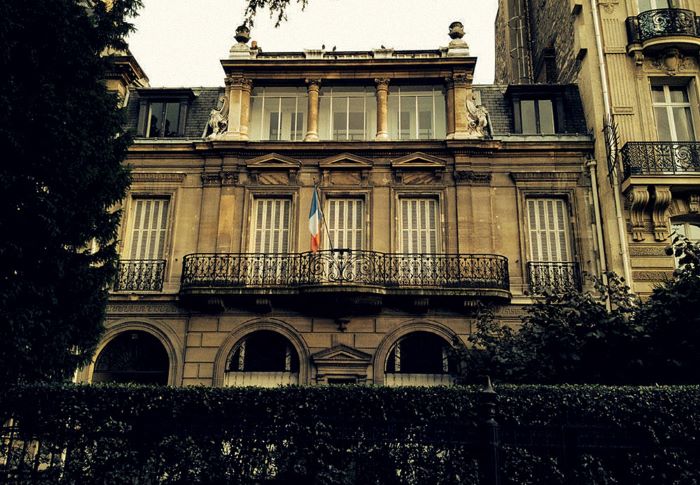
France hosts one of Europe’s largest Armenian communities, with an estimated 500,000 to 600,000 Armenians. Large communities also live in Paris, Lyon, and Valence. The biggest Armenian population is in Marseille, often considered the heart of Armenian life in France.
Many Armenians arrived in France after the early 20th century and built a strong cultural and political influence.
Armenian Culture Outside Armenia
Across the world, diaspora communities have established museums, cultural centers, libraries, churches, and schools to preserve their identity and pass it on to future generations.
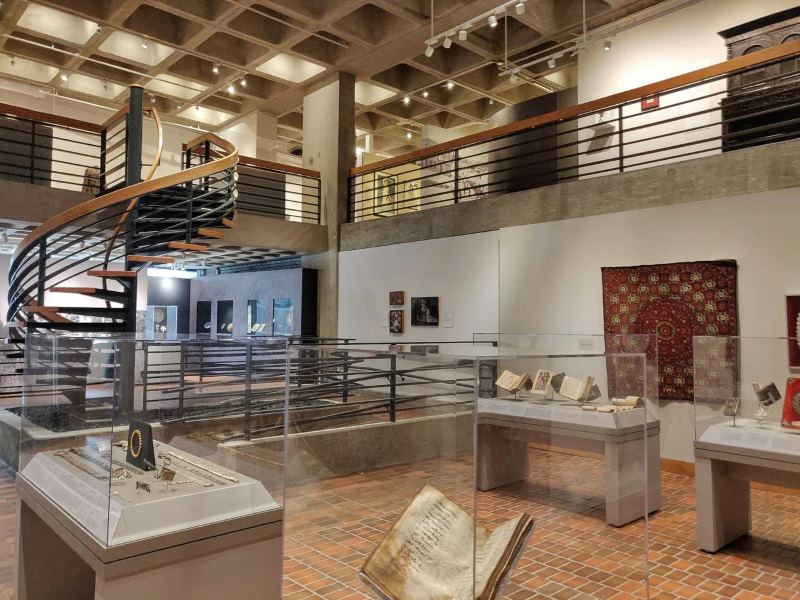
For example, in the United States, the Armenian Museum of America in Watertown, Massachusetts, showcases centuries of Armenian history, art, manuscripts, and artifacts. In France, Armenian cultural institutions and memorial museums reflect the deep roots of the community in cities like Paris and Marseille.
In Russia and Lebanon, Armenian churches and cultural centers serve as gathering points for language classes, exhibitions, and national celebrations.
Literature and the arts have also played a major role in maintaining Armenian identity abroad. Prominent cultural figures such as William Saroyan built their careers outside Armenia while keeping Armenian themes alive in their work.
Armenian Streets Abroad
Armenian influence is so widespread that Armenian streets and place names can be found in places you might never expect. Some of them are far from the traditional centers of the diaspora.
For example, Armenian Street in George Town, Penang (Malaysia) is a historic road that reflects the presence and contributions of early Armenian traders in Southeast Asia.
Another example is the Armenian Street in Kolkata, where Armenians established commercial settlements even earlier than the British East India Company and other European settlers.
Armenian Churches and Khachkars
Armenian churches can be found in surprisingly distant corners of the world. From North and South America to Europe and Asia.
One striking example is the Armenian Church of Saint Gregory the Illuminator in Singapore, one of the oldest Christian churches in the country. Another example is Armenian churches in places like Buenos Aires, Argentina, reflecting how far Armenian communities have spread geographically.
Beyond churches, Armenian identity abroad is also expressed through khachkars, cross-stones that are unique to Armenian culture. Traditionally found in Armenia, khachkars have also been installed around the world as symbols of faith, memory, and heritage.
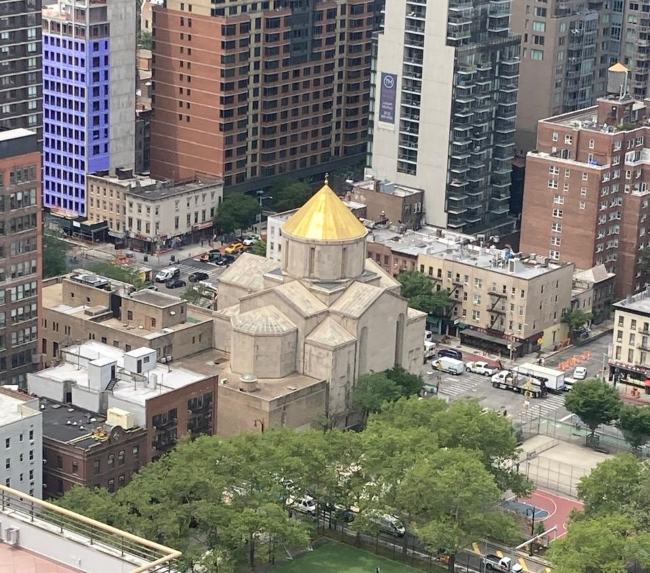
St.Vartan Armenian Cathedral, New York
For example, a khachkar stands in the Vatican Gardens, highlighting Armenian-Christian ties at the heart of global Catholicism. Another can be found in Cardiff, Wales, where an Armenian khachkar memorial was installed in Cardiff Bay.
This shows how Armenian identity has been preserved and made visible in some of the most unexpected places in the world.
For many Armenians of the diaspora, visiting Armenia is more than a vacation. It is a way to reconnect with heritage, language, and family history. Every year, thousands travel to experience the churches, landscapes, and culture they have heard about from parents and grandparents.
For over 30 years, Levon Travel has served as a bridge to the homeland, helping diaspora Armenians plan journeys back to Armenia. If you are considering rediscovering your roots, a thoughtfully organized trip can make that connection even more special.