
When walking through Yerevan, almost every visitor eventually notices the Armenian opera house, one of the city’s most beautiful and recognizable buildings.
It captures attention with its elegant architecture. For locals, it is more than just a theater but rather a symbol of Yerevan and one of the city’s most iconic landmarks.
However, beyond its architectural beauty, the building represents something deeper: Armenia’s rich tradition of opera and classical music.
The Yerevan Opera House has played a central role in this story. As the country’s main opera and ballet theater, it has been the stage where Armenian opera developed.
In this blog, we will explore the story of Armenian opera, important composers, and the role of the Yerevan Opera House.
Origins of the Armenian Opera Art
The origins of Armenian opera date back to the 19th century. The Armenian composers began experimenting with European classical music forms and mixing them with the elements of Armenian musical traditions.
During this period, opera had already become one of the most popular artistic genres in Europe. Armenian intellectuals and musicians who lived and studied abroad were inspired to develop a similar tradition.
One of the key figures in the birth of Armenian opera was Tigran Chukhajian. He is often considered the founder of Armenian classical opera. In 1868, he composed Arshak II, which is widely regarded as the first Armenian opera.
The work combined the structure of European opera with themes from Armenian history, telling the story of the Armenian king Arshak II.
Early Armenian operas often drew inspiration from historical events, legends, and national heroes. It had a unique style as it blended classical melody with influences from Armenian folk music.
The Golden Era of Armenian Opera
One of the most important milestones came in the early 20th century with the work of composer Armen Tigranian (1879–1950).
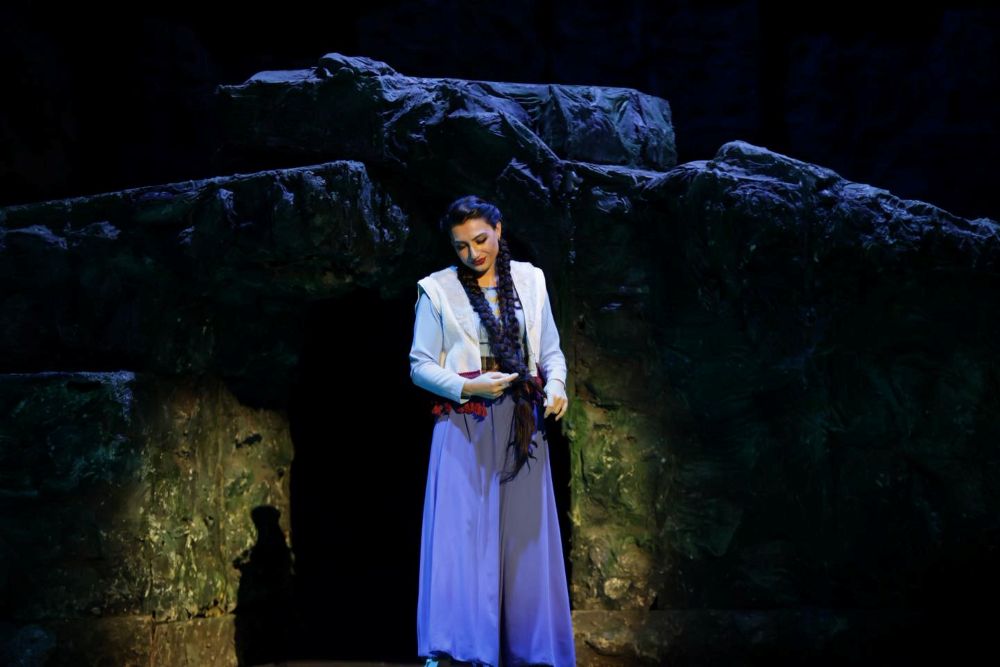
His opera Anoush became one of the most influential works in Armenian musical history. Tigranian composed Anoush between 1908 and 1912.
The basis of it is the famous 1892 poem by the great Armenian writer Hovhannes Tumanyan. The opera tells a tragic love story set in a traditional Armenian village. The young village girl Anoush falls in love with a shepherd named Saro, but their relationship ends in tragedy after a conflict between Saro and Anoush’s brother.
The opera was first performed on August 4, 1912, in Alexandropol (today’s Gyumri). However, in 1935, it was staged at the Armenia Opera Theatre in Yerevan, where it quickly became a central piece of the repertoire.
Tigranian also composed the opera David Bek, which is also based on Armenian history. It tells the story of the 18th-century Armenian national hero David Bek, who led the Armenian struggle against Persian and Ottoman domination.
Yerevan Opera and Ballet Theater
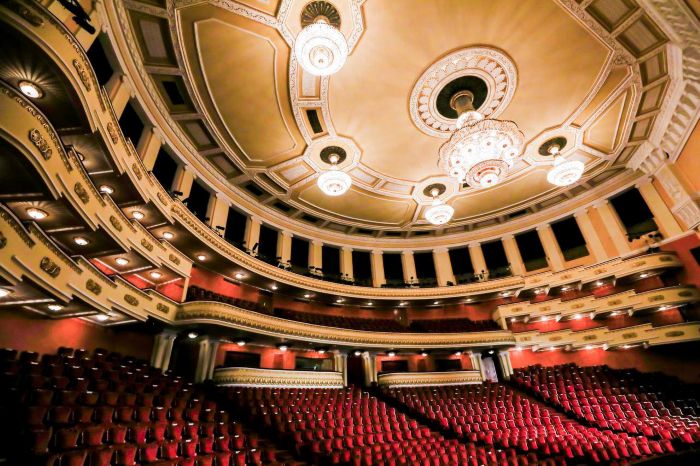
The official name of the building is the Alexander Spendiaryan National Academic Theatre of Opera and Ballet. Spendaryan was a conductor and is considered a founder of Armenian symphonic music.
It was designed by the renowned Armenian architect Alexander Tamanyan, who also helped shape the modern layout of Yerevan. His vision was to create an architectural masterpiece that would become a central element of the city.
Construction of the opera theatre began in 1930, and the building was officially opened on January 20, 1933. The project was completed in several stages. The main hall was finished in 1939, and the complex reached its final architectural form in 1953.
The building has two halls: Alexander Spendiaryan Opera and Ballet Theatre and the Aram Khachaturian Concert Hall. The first hosts opera and ballet performances, while the second hosts symphonic concerts.
Opera for Tourists
With performances scheduled throughout the year, attending an opera or ballet is another excellent way to spend an inspiring evening in Yerevan.
The theatre’s repertoire presents a rich combination of Armenian national works and internationally famous masterpieces.
Among the Armenian highlights is Anoush by Armen Tigranian. The program also regularly includes internationally celebrated productions by composers such as Puccini, Verdi, and Bizet. Visitors can enjoy operas such as Turandot, Carmen, Traviata, and La Boheme.
Tickets are generally accessible, typically ranging from $13 to $50.
Armenian Ballet and Aram Khachaturian
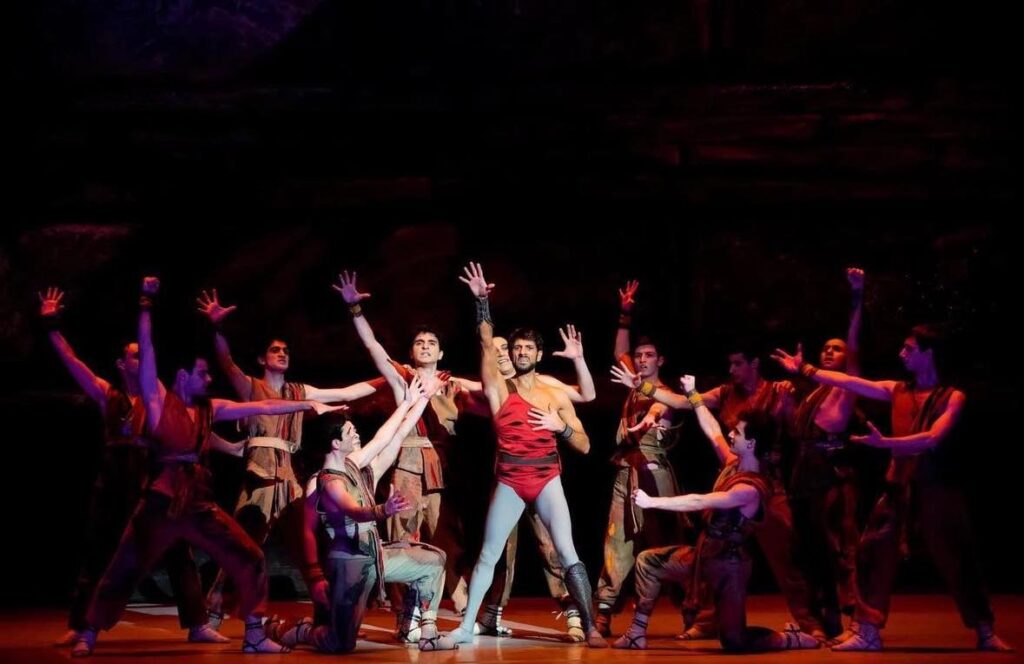
Ballet has also played an important role in Armenia’s classical music tradition. One of its greatest representatives is the world-renowned Armenian composer Aram Khachaturian.
He is considered one of the leading composers of the Soviet era. Khachaturian achieved international fame for his powerful orchestral music and dramatic ballets.
Among his most famous works are the ballets Gayane and Spartacus. Gayane, first staged in 1942, includes the famous Sabre Dance, one of the most recognizable pieces of classical music in the world.
Today, Khachaturian’s ballets are performed in Yerevan, and not only his ballets. So if you are more of a ballet lover, it’s a great chance to attend some of the timeless ballet classics like Swan Lake or Giselle.