
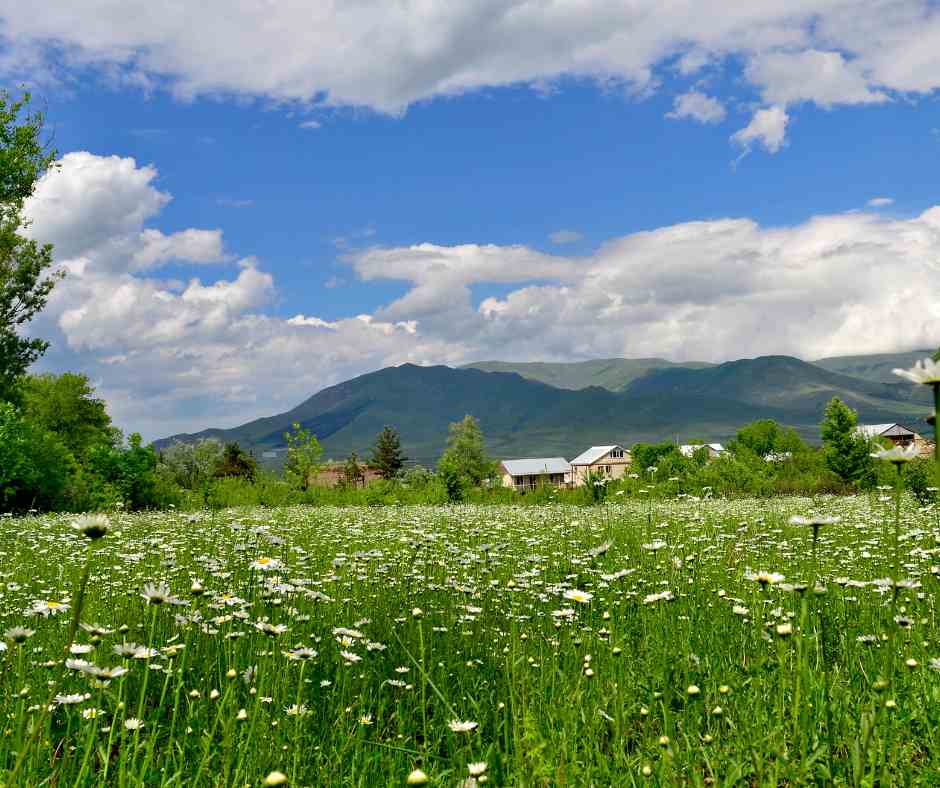
There are two types of people: some like the buzz of big cities, endless cafes and nightlife, the others prefer calm hotels surrounded by nature. Yerevan offers plenty of options for the first group, while those who like peaceful retreats should take a closer look at the small towns.
One of them is Stepanavan in northern Lori province. Stepanavan sits at an elevation of 1,375 m, surrounded by mountain ranges and the tranquil flow of the Dzoraget River. The air here is famously crisp and clean. The local gem is the Stepanavan Dendropark which is a favorite for wellness retreats. Once heavily damaged in the 1988 Spitak earthquake, the town has since revived itself into a charming eco-resort destination.
This blog will tell you what to do in Stepanavan, a perfect off-the-beaten-path escape for travelers seeking nature over noise.
Breathe in Nature: Stepanavan Dendropark
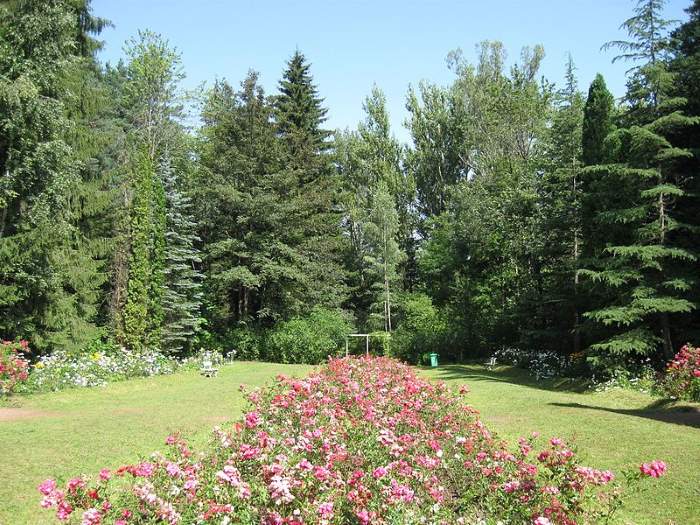
When people think about Stepanavan, the first thing that comes to mind isn’t a museum or a monastery but it’s nature. The town’s number one attraction is its serene natural surroundings. Green fields stretch toward forested hills, mountain air and peaceful tranquility. Only 13 kilometers away from the town lies the Stepanavan Dendropark.
Founded in 1931 by Polish-Armenian botanist Edmon Leonowicz, the Dendropark which is also known as the Sochut Arboretum is at an altitude of 1,450 meters and covers 35 hectares of land. It’s a rare blend of wild and cultivated. Half of the park is just a natural forest. The other half is home to hundreds of carefully planted species from all over the world, including Georgia, Ukraine, Russia, Germany, Portugal, and even China.
Among the park’s treasures are five young California sequoias, considered rare in this region. In fact, out of the 2,500 species once planted here, around 500 have successfully adapted to the region’s frosty winters and rich soils. There are also many flowers and other plants, but Dendropark resembles a natural forest rather than a cultivated park which is great.
The park is a haven not only for visitors but also for scientists, who use it to study how plants respond to new climate conditions. But you do not have to be a scientist, just a stroll through alleys or a picnic in the pine-scented air is more than enough to restore your sense of calm.
Visit Medieval Lori Fortress
Only a ten-minute drive away from the city center, the tourists can find Lori Fortress. It offers spectacular views as it is located between the deep ravines of the Dzoraget and Miskhan Rivers. The fortress was founded in the early 11th century by King David I Anhoghin of the Kyurikid dynasty. It served as the capital of the Kingdom of Tashir‑Dzoraget. Later in the fortress grew into a fortress-city home to roughly 10,000 residents.
Its strategic placement on northern trade routes made Lori a prize for conquering armies. In the 12th century it was occupied by Seljuks in the 12th century and later controlled by Georgians, then the Zakaryan dynasty, and finally overtaken by the Mongols in 1239. Though its military importance waned by the 18th century, Lori endured as a refuge before eventually being abandoned.
Of course, not all parts of the fortress stood the test of time, but now visitors can explore the impressive basalt walls. Some stand up to 25 m high and 20 m thick. There were even underground tunnels that once drew water from the river below.
Travel to Nearby Villages
Stepanavan is a great base to stay and enjoy the beauty of Lori province. The town is just an under-hour drive from a bunch of charming villages like Odzun, Dzoraget, Dsegh, Debet and others. In addition to rural Armenian culture and sweeping canyon landscapes, local villages are home to beautiful medieval monasteries and churches.
One of them is Odzun, which is home to the Odzun Church, a pink‑felsite basilica with elegant, arcaded cloisters and a rare medieval funerary monument. The views here are spectacular, with ancient stone arches contrasting the dramatic cliffs below.
The village of Dzoraget has beautiful basalt‑rock architecture, rolling green hills, anda river‑carved gorge. Meanwhile, Dsegh is the birthplace of national poet Hovhannes Tumanyan. Beyond the Tumanyan house‑museum, visitors can discover medieval khachkars, church ruins, and natural gems like Lake Tsover.
A bit further afield but still within an hour is Hnevank Monastery, a serene 7th–12th-century complex. It has been recently restored and is located in a beautiful setting.
Inspect Hiking Trails
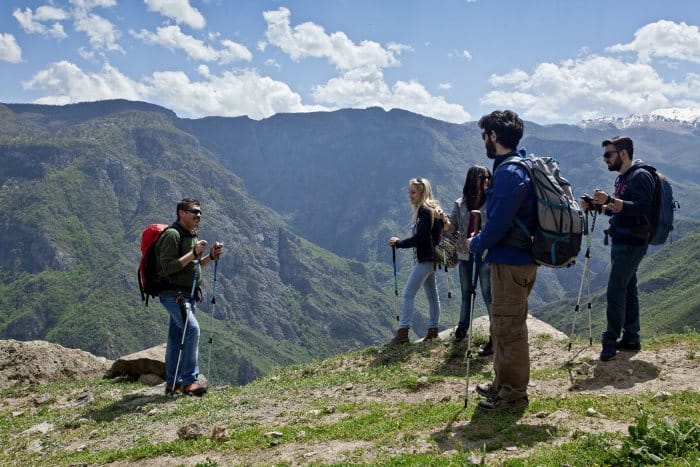
If you wonder what to do in Stepanavan, first thing is to hike and enjoy nature. What makes it unique in Armenia is the mix of pine forests, deep river canyons, and panoramic views.
One of the most exciting aspects for hikers is that the Transcaucasian Trail (TCT) passes right through the Stepanavan region. The TCT is an ambitious long-distance trail network being developed across Armenia and Georgia. It connects around 3,000 kilometers of trails across the Caucasus. In Armenia, the trail stretches from the Georgian frontier to Syunik province, cutting through mountain passes, ancient villages, and dramatic gorges.
Besides, there are several hiking trails going through the Dzoraget Canyon. Some of the paths are well-traveled, others are hidden. Popular routes are the Smart Walk, Dsegh–Dzoraget, Kobayr–Horomayr–Odzun, and the World Heritage Trail.
Overall, staying in Stepanavan is a good idea to be close to the stunning architectural sites in Lori province or simply to enjoy a couple of calm days far away from busy traffic and city life.