
Can you imagine that Yerevan is more than 2000 years old? Armenia’s capital city may not boast the ruins of Rome or Athens, but it is actually one of the oldest continuously inhabited cities in the world.
Every October, the city celebrates its birthday with massive festivities called Erebuni-Yerevan. Streets come alive with concerts, open-air exhibitions, traditional dances, and fireworks over Republic Square.
How has Yerevan transformed over the centuries into a lively city that has recently become very popular among tourists? Let’s dive deeper into Yerevan’s fascinating history and the traditions behind celebrating its City Day.
How Old is Yerevan? A Short Historical Overview
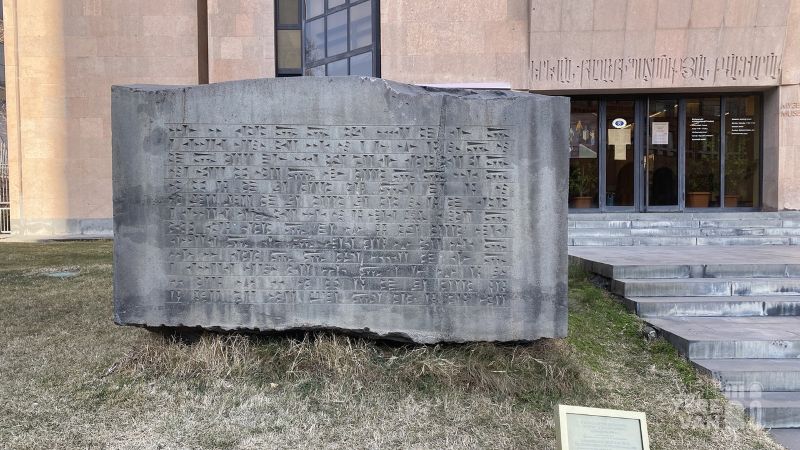
It’s hard to believe, but Yerevan was founded almost three millennia ago. The story begins in 782 BC, when King Argishti I of Urartu built a fortress called Erebuni on a hill known today as Arin Berd.
An inscription carved in basalt, which is today kept in the Erebuni museum, still tells the tale. “By the greatness of the god Khaldi, Argishti built this stronghold and named it Erebuni”, an inscription says. The time it was written was the moment Yerevan was born, and this date actually makes it older than Rome.
Over the centuries, Erebuni grew, fell, and rose again under many empires, including Persian, Byzantine, Arab, Mongol, and Russian. Each left its mark on the city’s spirit and skyline.
Many events could affect history and erase the capital city, but Yerevan always rebuilt itself.
In the 20th century, visionary architect Alexander Tamanyan redesigned it into the city we know today. It is now a city of buildings made of pink tuff that captivates every tourist visits it. Tamanyan’s plan gave Yerevan its balance of charm and order. Although not all details of the plan were implemented, it still has a circular park designed by Tamanyan.
Where to Go to See Old Yerevan?
The number one place to explore Yerevan’s history is Erebuni. It is located on a hill, the original site of the Urartian fortress built in 782 BC. The museum houses over 12,000 artifacts from excavations in Erebuni, the Red Hill, and Shengavit.
Inside, you’ll find a model of the original fortress, cuneiform tablets, ancient pottery, tools, and jewelry.
When walking in the city, head to the Yerevan History Museum. Founded in 1931, it has grown from modest exhibition to a spacious building next to City Hall.
You’ll see relics ranging from Urartian times, medieval artifacts, old city maps, photographs, traditional costumes, and even items from visitors’ archives.
By the way, a copy of the cuneiform inscription of King Argishti I is placed in front of the Yerevan History Museum as well.
Erebuni Yerevan Celebrations
The city’s birthday party is known as the “Erebuni-Yerevan” festival. This year, Yerevan celebrates 2807th anniversar,y but let’s see when it all started.
The tradition dates back to October 1968, when Yerevan celebrated its 2750th anniversary with week-long festivities. New books and films about Yerevan appeared, exhibitions opened, and choirs of 2,750 singers performed the hymn “Erebuni-Yerevan” for the first time. That same year, the Erebuni Museum was inaugurated at the foot of Arin Berd Hill. Moreover, 2,750 trees were planted, and fountains sparkled across newly built parks. Since then, City Day has become a good tradition, growing more diverse each year.
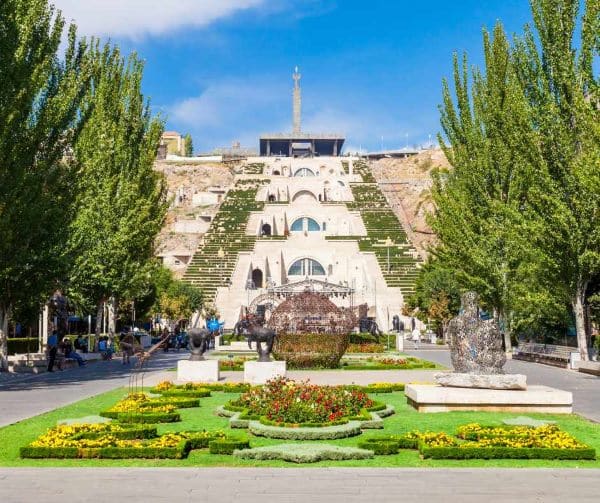
Today, the celebration unfolds across every corner of Yerevan. Charles Aznavour Square usually hosts pop and variety concerts, while the Cascade Complex transforms into an open-air jazz stage.
Families gather at the squares near the Opera House. However, major event usually happens at Republic Square and is traditionally wrapped up by fireworks.
Must-Visit Landmarks
In addition to museums, there are some must-visit sites that are crowded and festive on Yerevan-Erebuni Day. Even if you don’t make it to the ancient hills of Erebuni, there’s no shortage of history and beauty right in downtown Yerevan.
The city’s heart is compact, walkable, and full of landmarks. Luckily, they are all within a short stroll from each other.
Start your exploration at the Matenadaran, at the top of Mashtots Avenue. This monumental building houses thousands of ancient manuscripts. Some of them are more than a thousand years old. But another advantage is the view of Mashtots Avenue that opens from the stairs of the museum.
Just below it lies one of Yerevan’s favorite hangouts, the Cascade Complex, a massive staircase with modern sculptures, gardens, and fountains. Climb to the top or take the escalator inside to enjoy panoramic views of the city framed by the majestic Mount Ararat.
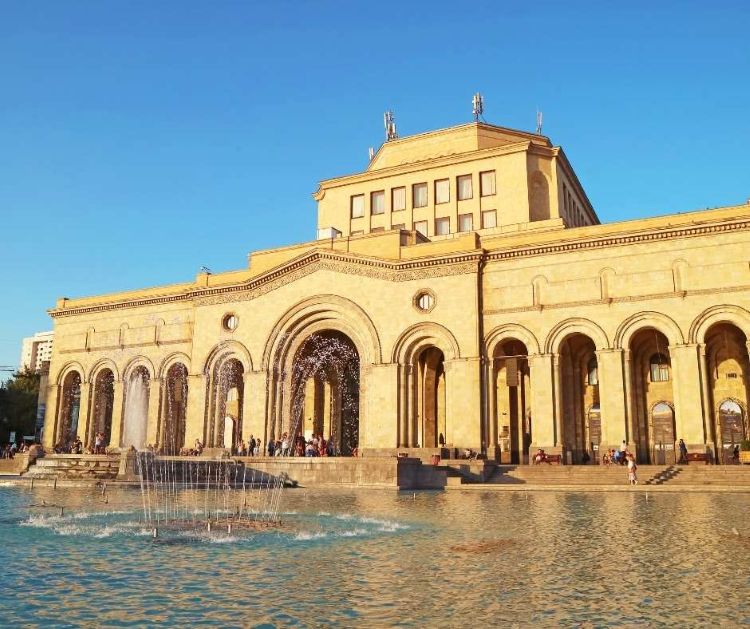
A short walk away, you’ll reach the Opera House, one of the popular areas for events. Go down Northern Avenue to reach Republic Square, the architectural jewel of Yerevan. It was designed by Alexander Tamanyan, and it’s surrounded by pink buildings. One of it houses government offices, another the History Museum of Armenia, and the National Gallery.
At night, especially in summer and fall, its dancing fountains and light shows bring crowds under the open sky.
For a more local touch, stop at Charles Aznavour Square, a cozy plaza filled with cafés and live performances, especially during festivals. And don’t leave without Vernissage, the open-air market where local craftsmen sell handmade jewelry, carpets, and traditional crafts.