Some countries like Italy, Greece, or Egypt have long been favorites for Armenian travelers, drawing crowds year after year. But there are other destinations quietly waiting for their moment to shine. Morocco is one of them. Moroccan cities with an ancient past, vast deserts, rich culture and coastal charm make it an exotic journey that feels like multiple countries in one. A colorful trip of its cities can take you through desert, iconic landscapes and cinematic views.
What makes Morocco especially intriguing for Armenian tourists? It’s a destination that balances the familiar with the exotic. There are centuries-old sites and also the love for hospitality and community which resonate with Armenians accompanied by exotic desert landscapes, blue-hued streets and camels in Sahara.
Levon Travel’s Armenian group tour to Morocco is the perfect chance to explore the country’s magic. This blog will guide you through some of its popular cities included in the itinerary.
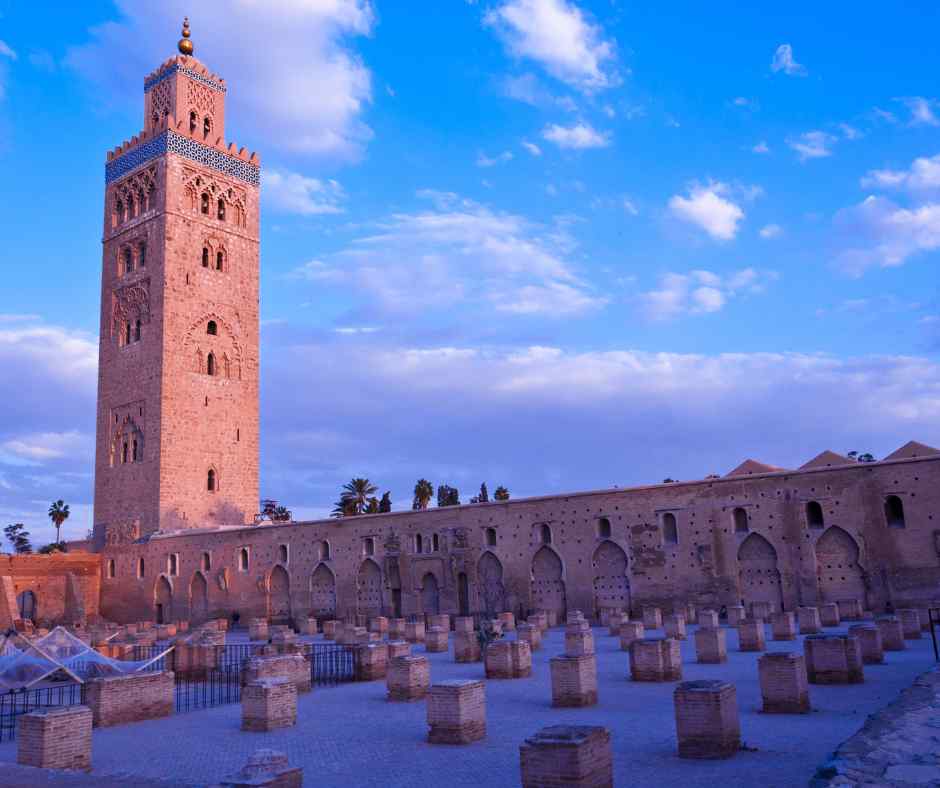
Marrakesh
The first step to explore Morocco is its capital city, Marrakesh, which bursts to life the moment you step into Jamaa el‑Fna – its main square.
Marrakesh was founded around 1070 by the Almoravid leader Abu Bakr ibn Umar, quickly becoming the imperial capital. It later thrived under the Almohads in the 12th century and flourished again as a Saadian capital in the 16th century. Iconic symbols of the Moroccan capital city are red walls and the vibrant medina that reflect centuries of dynastic power.
From the square, tourists dive into the souks that are filled with spices, rugs and other exotic stuff. Then it’s a stroll to the old palaces: the 12th‑century Kasbah district with its evocative Bab Agnaou gate and the ruined beauty of El‑Badi Palace.
Next stop is Majorelle Garden in the upscale Gueliz quarter. Here, tourists can see the oasis of vibrant cobalt‑blue architecture and cactus groves.
Rabat
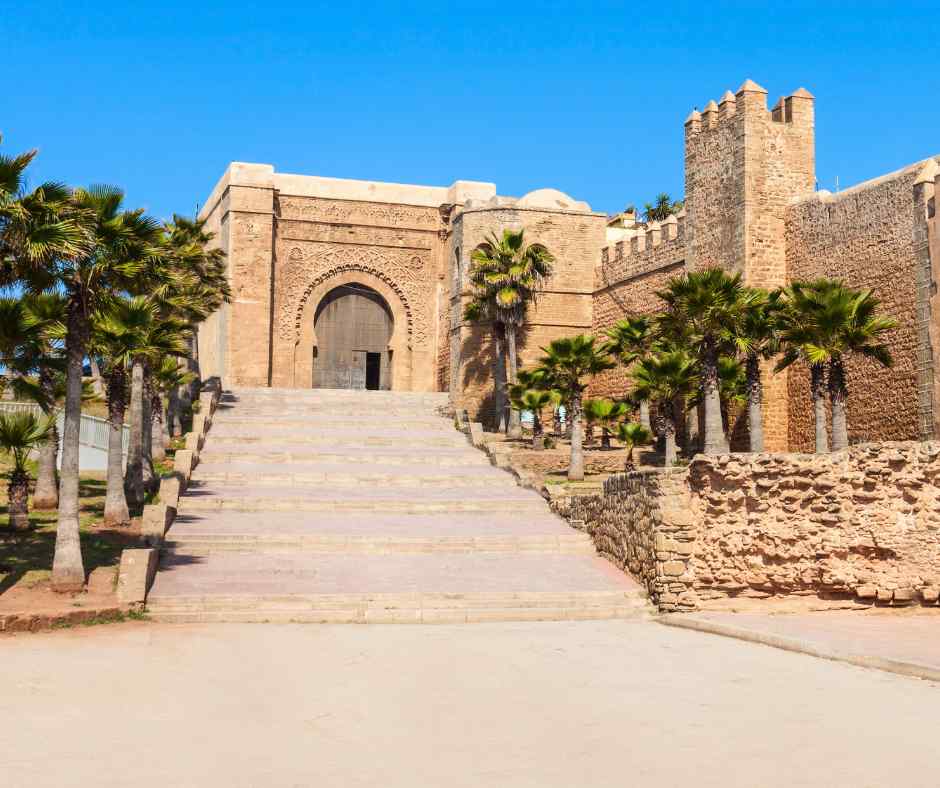
Rabat’s history dates back to the 12th century when it was founded by the Almohad dynasty as a military base. The first place to visit is the Kasbah des Oudayas, a serene 12th‑century fortress perched at the mouth of the Bou Regreg. Tourists can feel the calm in its blue‑and‑white alleys, stroll through charming Andalusian Gardens, and enjoy mint tea on a terrace.
The Hassan Tower, a striking 12th‑century minaret left unfinished, is also on the list. The tower rises 44 meters beside the ruins of an enormous mosque.
Beside the tower, discover the Mausoleum of Mohammed V, an elegant royal tomb built in the 1970s with luminous marble and ornate Moorish craftsmanship.
Finally, pass by the grand Royal Palace gates, where the towering walls and ceremonial guards hint at Morocco’s living imperial heritage.
Casablanca
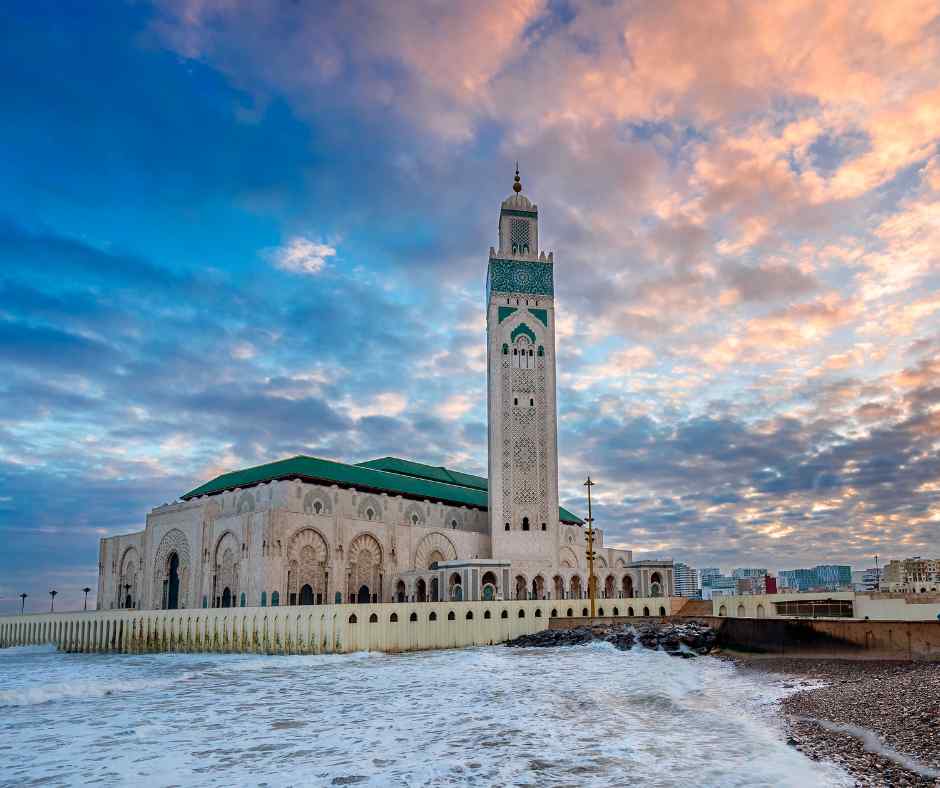
This city has modern energy and Atlantic charisma, offering both a cosmopolitan vibe and glimpses into Morocco’s history. As the country’s largest city, it has sleek high-rises and buzzing commercial districts and historic neighbourhoods.
One of the signature highlights is the Hassan II Mosque. Its soaring 210‑meter minaret, retractable roof, marble interiors, and ability to hold over 100,000 worshippers make it a masterpiece of modern Islamic architecture. Tours typically include skip‑the‑line access for a look inside this monument.
The itinerary also weaves through the United Nations Square plus a stroll along the vibrant Corniche, where cafés and Atlantic views bring the city’s seaside spirit to life.
Other notable stops often include the charming Old Medina, the upscale Quartier Habous, and the iconic Twin Center towers.
Meknès
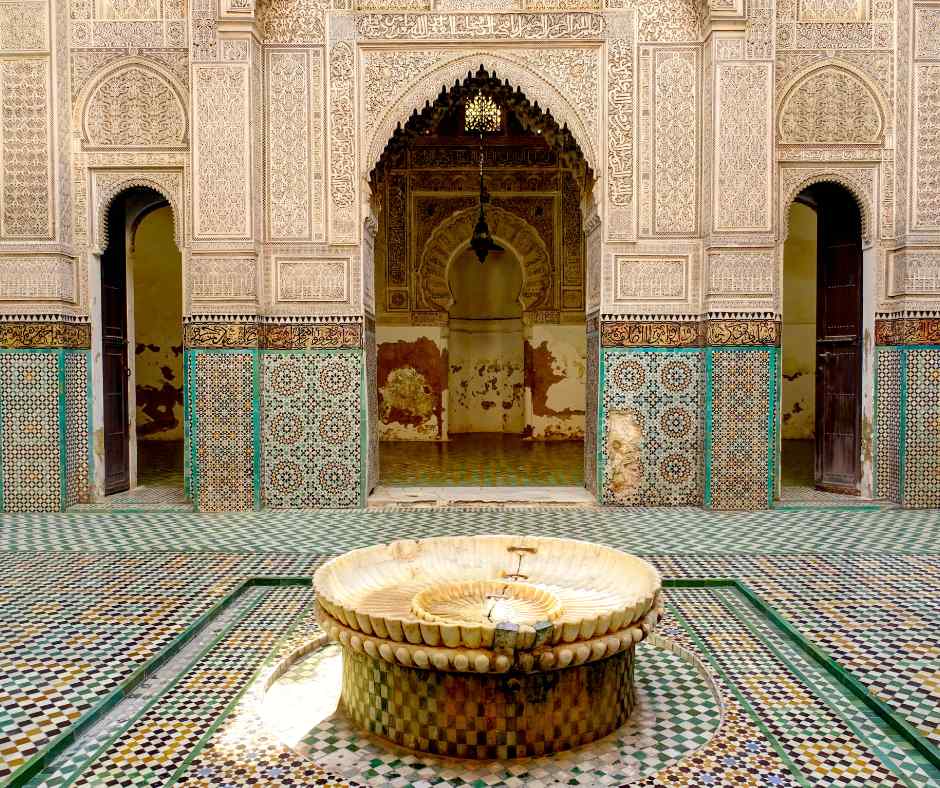
Founded in the 11th century by Almoravid Berbers, Meknès rose to prominence under Sultan Moulay Isma’il in the late 17th century. He transformed it into Morocco’s capital, building massive walls, grand gates, palaces, and water systems. By the way, it has a UNESCO World Heritage status for its remarkable architecture.
Today, tourists can see some of its stunning monuments. One of them is Bab Mansour, a monumental gate with dazzling zellij tiles and marble columns. Right beside it is El Hedim Square, a lively plaza that was once the rubble-cleared stage for palace construction.
Nearby stands the Mausoleum of Moulay Isma’il. Though outsiders may only view it from the exterior, its elegant façade hints at rich Moorish craftsmanship and the tomb’s historic significance. Bottom of Form
Fez
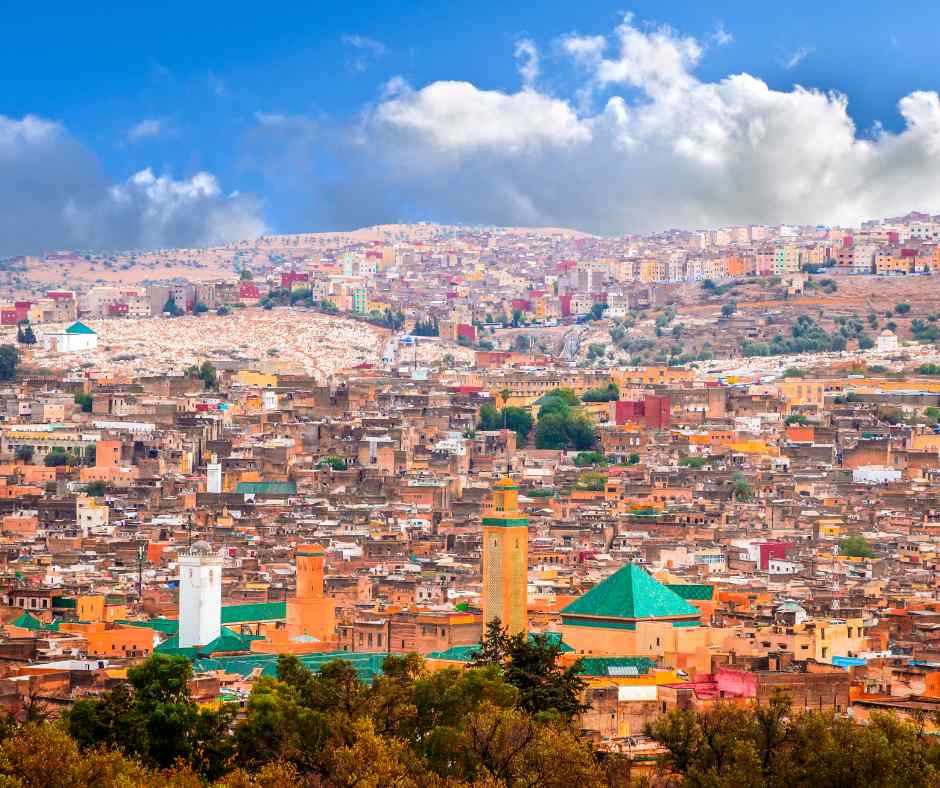
Founded in 789, Fez grew through Almoravid and Marinid rule into Morocco’s intellectual and religious capital. The city’s golden era in the 13th–14th centuries when it was also an educational center.
Fez reveals its magic through the ancient historic district of Fes el-Bali. This UNESCO World Heritage site is a labyrinth of alleys, crowded souks and workshops. The iconic place is Chouara Tanneries, where leather dye pits have operated since the 11th century.
In addition to the noise of the city, there are also serene courtyards and gardens. One of them is the peaceful Bou Jeloud Gardens. For the views of terracotta rooftops and minarets, tourists can climb the Tombs of the Merenids.
The spiritual heart of Fez includes the al-Qarawiyyin University and Mosque, founded in 857 and celebrated as the oldest continually operating higher-education institution.
Ouarzazate
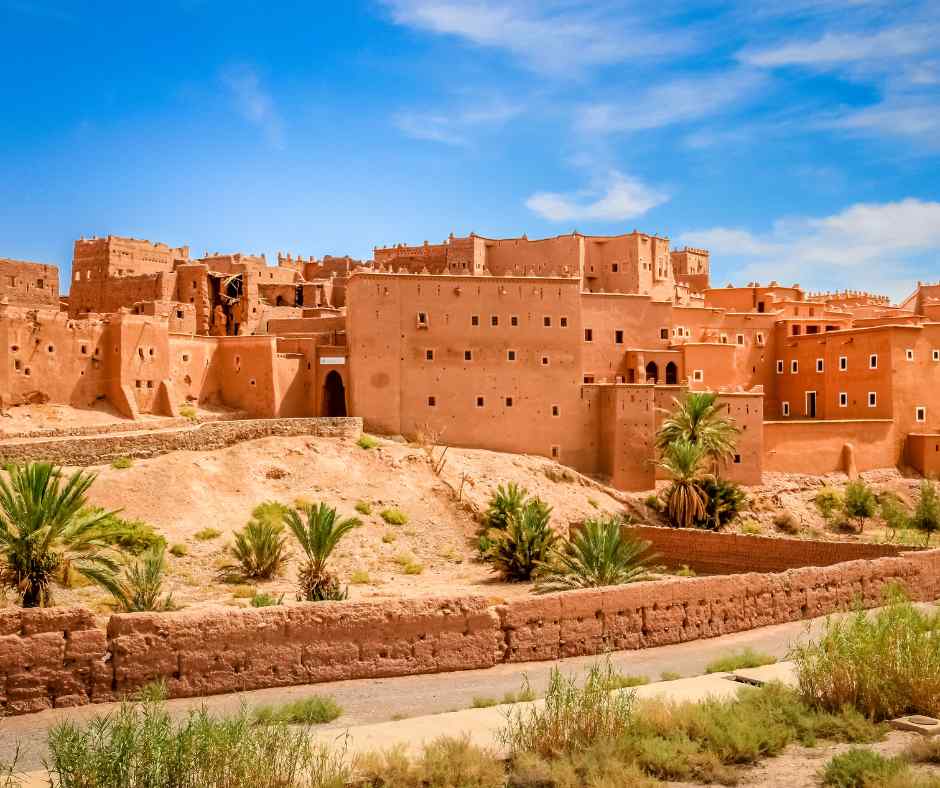
This city is sometimes called “Hollywood of Africa” thanks to the Atlas Film Studios. Its desert terrains have starred in countless international films, including Game of Thrones.
In the past, Ouarzazate served as a key crossroads for African traders traveling between the Sahara and the north. Its most iconic structure, the Kasbah Taourirt, was once the stronghold of the powerful Glaoui dynasty.
A must-visit site here is Ait Benhaddou, a fortified village along the historic caravan routes. It has also been on the UNESCO World Heritage list since 1987.
Morocco offers Armenian travelers rich experiences, and a dedicated group tour is a great chance to feel them all. Book Levon Travel’s group tour to explore the charm of the Moroccan cities.