Armenian culture is not confined to Armenia. You can find Armenian presence in many countries, from Singapore to the United States.
Wherever Armenians settled, they carried books, art, and traditions with them, and in many places, those pieces of heritage grew into full museums and cultural centers.
For example, the Mekhitarist monasteries in Vienna and Venice, where priceless manuscript collections have been guarded for centuries, or more recent initiatives like the Saroyan Museum in Fresno.
The Armenian museums abroad are living reminders of how Armenians have worked to preserve and share their culture outside the homeland. In this blog, we will list some museums that tell Armenia’s story on an international stage.
Mekhitarist Monasteries in Venice and Vienna
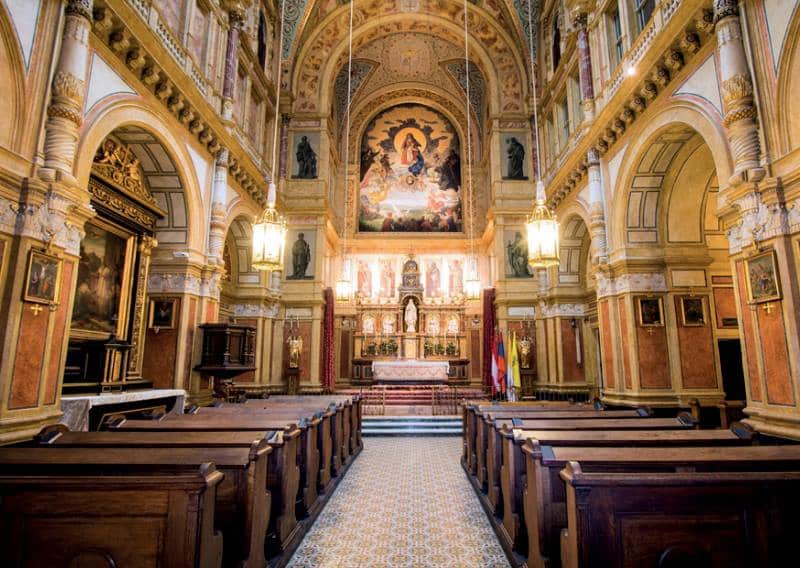
The Mekhitarist Monastery, located on an island near Venice, is not a traditional museum. It’s a monastery that has been a center of Armenian culture and scholarship since 1717.
Unlike traditional museums, the Mekhitarist Museum on San Lazzaro integrates into an active monastic complex. There is a church, cloister, library, manuscript archives, and a gallery. It may not feel like a polished exhibit hall, but the items on display there are unique.
For example, there is an Urartian bronze helmet and belt, a 14th‑century sword once wielded by King Leo V of Cilicia, and ceramics from Kütahya. There are also coins, First Republic passports, a medieval agate bas‑relief from Ani, and the dramatic curtain from Lim Monastery on Lake Van. Art lovers won’t want to miss Hovhannes Aivazovsky’s paintings. Perhaps the most poignant piece is the death mask of Komitas, the musician who shaped Armenian music.
Meanwhile, the Mekhitarist Monastery in Vienna houses an estimated 2,600–2,800 Armenian manuscripts, the fourth-largest manuscript collection worldwide. Its library also holds around 70,000 Armenian periodicals, making it the most extensive archive of Armenian magazines in the world. The monastery also preserves some 3,200 Armenian coins, many dating from the Kingdom of Cilicia, and again that’s the largest Armenian numismatic collection globally
Armenian Museum of America
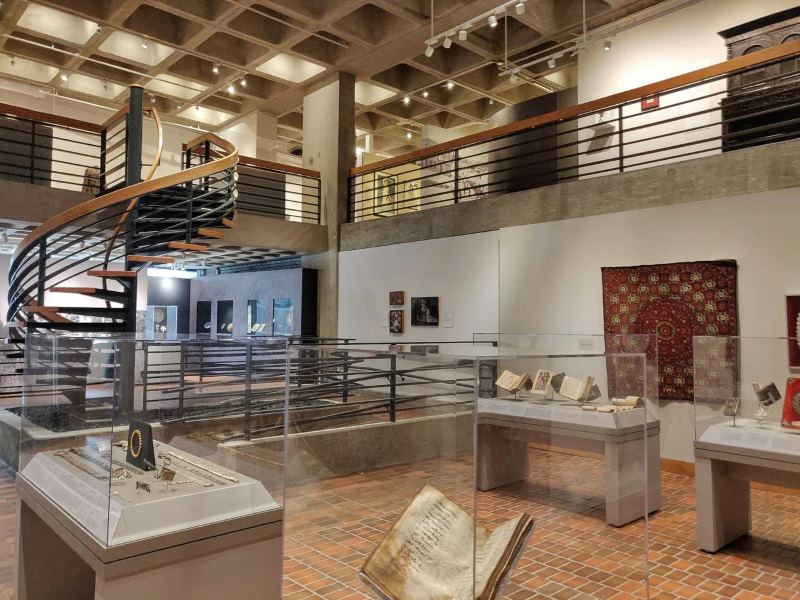
The Armenian Museum of America in Watertown, Massachusetts, is the largest institution in North America dedicated to preserving Armenian heritage. Founded in 1971, the museum serves as both a cultural center and a community hub.
Its collection is vast and varied, ranging from Urartian artifacts and medieval illuminated manuscripts to Kütahya ceramics, inscribed rugs, folk costumes, paintings, and religious objects. Among its highlights is the Bedoukian Collection, a donation of more than 6,000 items that include coins, early printed works, maps, and textiles.
The museum also houses one of the most significant Armenian textile collections outside Armenia, with around 3,000 pieces and 170 inscribed rugs.
A key strength of the museum is its Mesrob G. Boyajian Library, which holds over 30,000 titles. Its treasures include rare Armenian books, extensive periodicals, and the Herbert Offen Oriental Carpet Research Collection, one of the most comprehensive resources on rug studies. The library also safeguards over 1,400 hours of oral history interviews, including testimonies from genocide survivors.
Saroyan Museum
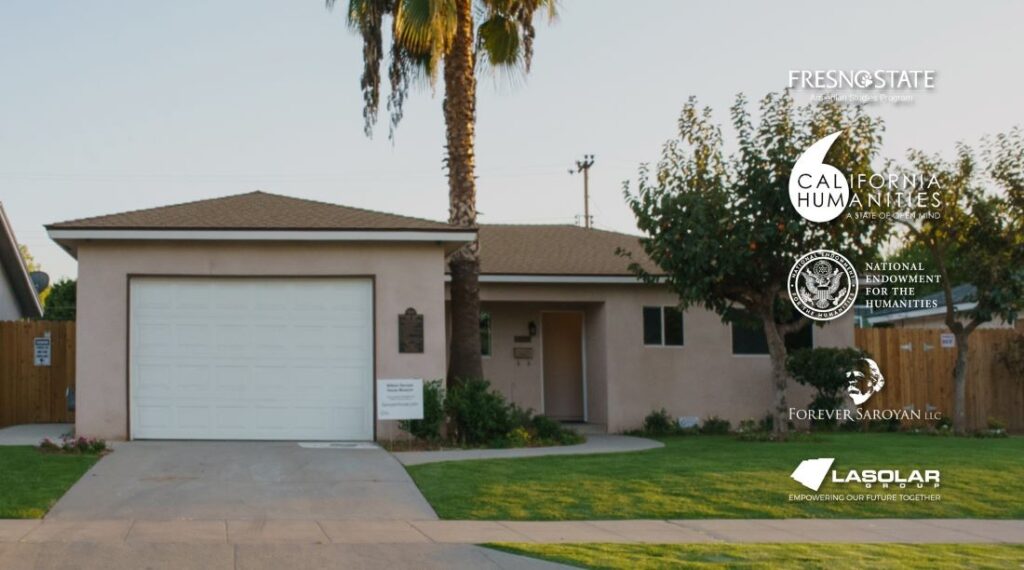
This museum in Fresno isn’t a typical museum but a childhood home where the Pulitzer Prize-winning Armenian American writer William Saroyan spent the final 17 years of his life.
The museum was opened on the date that what would have been his 110th birthday in August 2018. It fulfills Saroyan’s own wish to establish a research hub in his Fresno home.
The absence of his personal belongings was a deliberate choice by the curators to keep the setting authentically Saroyan’s, rather than turning the home into a forced tribute.
There are two immersive rooms that tell the story of a great writer. First, the Visual Biography Room, where sketches, book covers, photographs, and drawings glow against black walls in the dim light. Motion‑sensor ceilings follow visitors’ movements, making the walls feel alive.
Then there’s the Hologram Room, where, behind a protective glas,s you encounter a 3D projection of Saroyan, hovering in mid-air.
Armenian Museum of Moscow
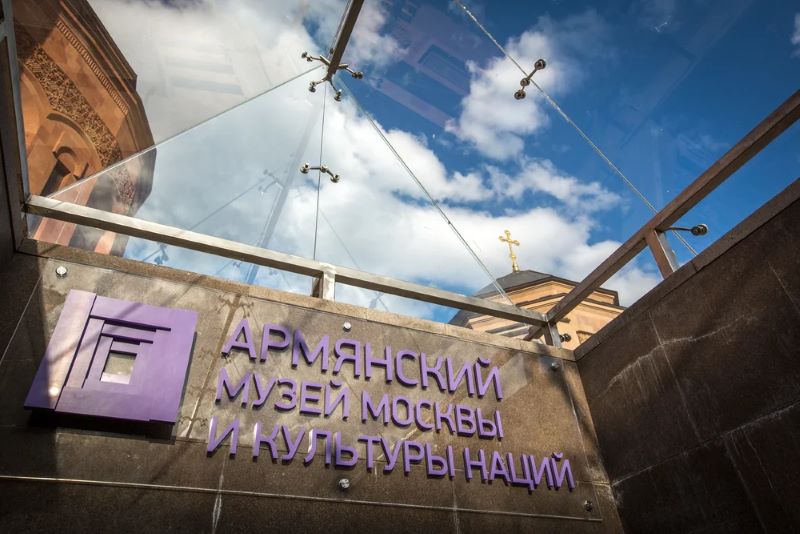
This is one of the most dynamic Armenian cultural institutions abroad. It was opened in 2015 on the centennial of the Armenian Genocide. The museum today is one of the largest interactive Armenian museums outside the country.
Located within the Moscow Church complex of the Armenian Apostolic Church, the museum covers 1,600 square meters and houses nine expositions. Eight of them are presented through modern interactive installations.
In addition to its interactive displays, the museum preserves tangible treasures. There are early 20th-century documents, household items, posters, advertisements, and photographs, as well as artifacts dating from the first millennium. The art collection is equally impressive, featuring paintings, sculptures, and the world’s largest oil painting of Mount Ararat.
Armenian Museum of France
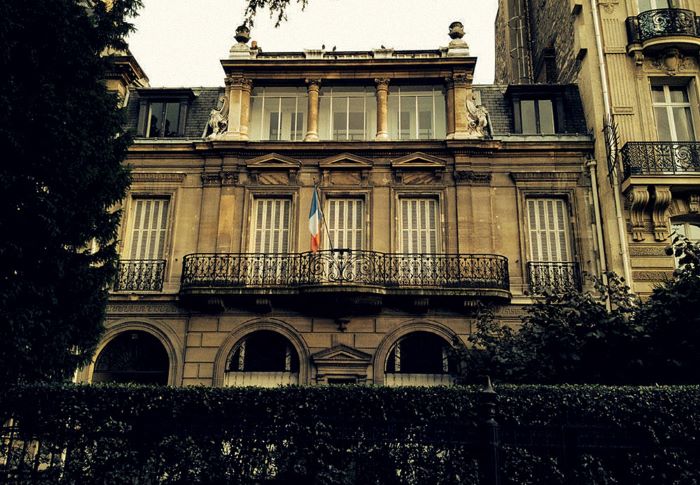
The Musée Arménien de France was founded in 1949 by Nourhan Fringhian, an Armenian exile determined to safeguard his culture’s memory.
Officially inaugurated in 1953 under French state patronage, it stands as France’s most significant home of Armenian art and archaeology.
It is currently closed to visitors due to building safety regulations. However, the museum’s collection continues to live digitally and through exhibitions elsewhere. Over the decades, the Musée Arménien has amassed close to 1,200 remarkable items that range from Urartian-era relics and sacred Armenian manuscripts to everyday objects.
Museum of Jerusalem
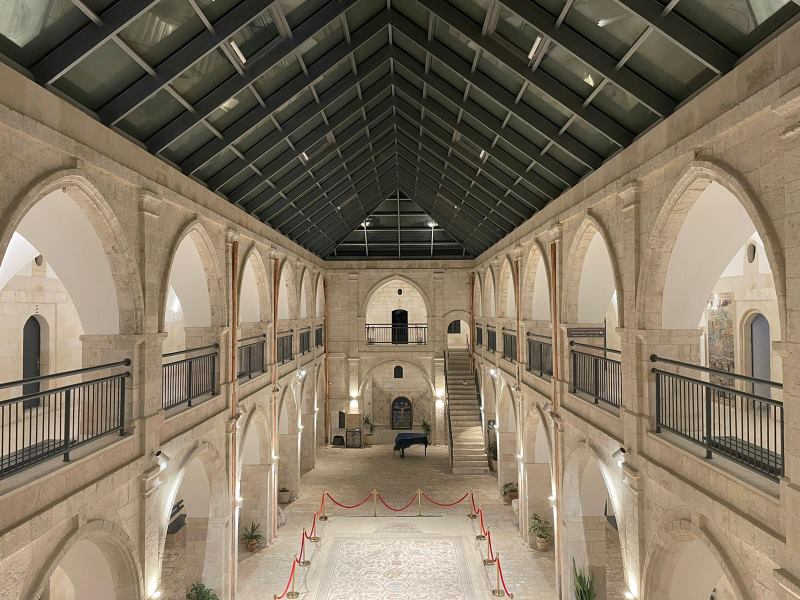
The Mardigian Museum of Armenian Art and Culture is located within the historic walls of the Armenian Quarter in Jerusalem.
It presents a journey through nearly three millennia of Armenian presence in the Holy Land.
Inside, you’ll encounter a rich array of treasures from finely woven rugs and ancient Armenian coins to colorful ceramic tiles. There is also a rare world map in Armenian, and even a replica of Gutenberg’s first printing press used in Jerusalem.
One of the sections honors the Armenian Genocide, while broader exhibits trace the community’s enduring connection to Jerusalem.