While in Western tradition, love is celebrated through Valentine’s Day, Armenians have their own love feasts celebrated in winter.
One of them is St. Sargis Day, when unmarried young people eat salty pastry or aghi blit before sleep, hoping to see their future spouse in a dream.
Soon after comes Trndez, celebrated on February 14. It’s a holiday that carries a different but equally powerful message of love, renewal, and unity.
Trndez is officially a Christian holiday in Armenia, marked by church blessings and candlelight rituals of the Armenian Apostolic Church.
At the same time, its roots go back to pre-Christian, pagan traditions, where fire symbolized the sun, purification, and fertility.
Pagan Roots of Trndez
The origins of Trndez go back to pre-Christian, pagan Armenia. Fire worship played a central role in spiritual life then.
The celebration was closely linked to solar cults and seasonal rituals, and in some traditions, it was dedicated to gods associated with fire (Vahagn), the sun, strength, and renewal. In pagan times, they believed that fire strengthened the power of the sun, helping it overcome winter’s cold and awaken nature for the coming agricultural cycle.
Symbolism
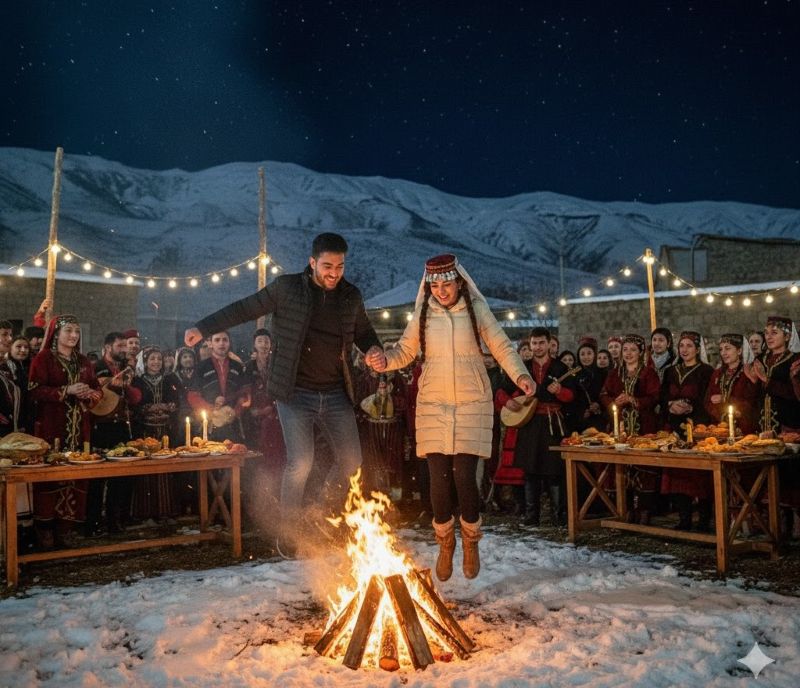
The main participants of the ritual were young men and women, newlyweds, and couples preparing for marriage. The central symbol of the celebration was the bonfire, over which couples jumped while holding hands.
As the youth jumped, elders sprinkled wheat and hemp seeds over them. Those were the symbols of fertility, abundance, and continuity of life.
After the young couples, older people, and childless women also jumped over the fire, hoping for renewal and blessing. The ritual ended with everyone joining hands and dancing in a circle around the fire.
Christian Tradition
In Christianity, Tyarnndarach literally means “Going to Meet the Lord” and symbolizes the spiritual encounter between humanity and Christ.
The name itself comes from Christian tradition and is rooted in the biblical story of the Presentation of Jesus at the Temple.
A woman who had given birth was required to bring her firstborn child to the temple on the 40th day, offer gifts to God, and receive a blessing.
In the tradition of the Armenian Apostolic Church, a child is baptized on the eighth day. On the fortieth day, the mother comes to church with the baby. The priest presents the child to God and blesses and purifies the mother.
The celebration begins on the evening of January 13. On January 14, a Divine Liturgy is held, followed by the Blessing of Newlywed Couples. By the blessing of Garegin II, Tyarnndarach has been officially proclaimed a day of blessing for newlyweds, turning the feast into a celebration of faith, family, and Christian unity.
How People Celebrate Trndez?
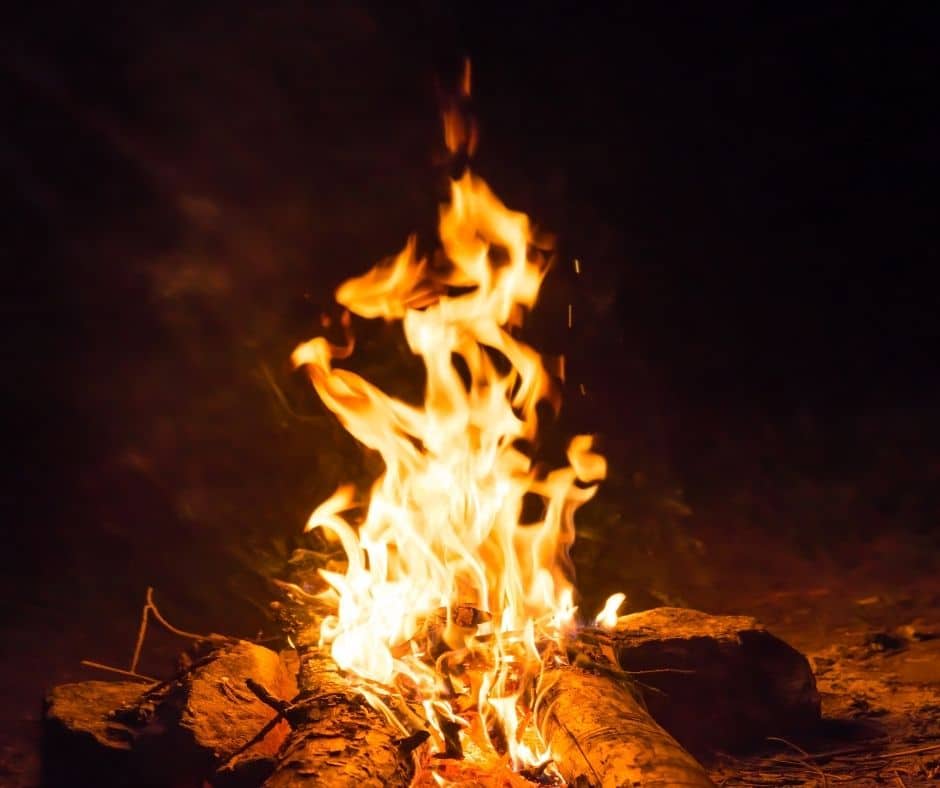
On the eve of February 13 and into February 14, people gather around bonfires. People light bonfires in church courtyards, or even in private yards if families have space at home.
Family members, neighbors, and relatives come together, sharing food and drinks as they celebrate. People often form a circle, while a central and joyful ritual is couples jumping over the fire together.
This is especially important for newlyweds. The couples that married during the last year jump over fire, and it’s believed to bring blessings, harmony, and strong love. After jumping, couples may receive presents from relatives, adding to the festive, warm atmosphere.
They said that if a young couple jumps over the fire without letting go of each other’s hands, their marriage will be strong and lasting.
There are also other popular beliefs tied to the flames. If the fire touches the couple during the jump, it is said to be a sign of fertility and the promise of a child in the near future.
After the newlyweds, other young people also jump over the bonfire, hoping to attract good luck and happiness. For unmarried participants, there is a playful belief that if the flame or sparks reach them, they are likely to find a husband or wife within the year.
Read about traditional Armenian festivities:
Where to Join?
If you want to experience this holiday during your stay in Armenia, just find the nearest major church. Traditionally, a big bonfire is near the Saint Gregory the Illuminator Cathedral.
If you are in rural Armenia, it’s likely you see bonfires near the houses.
In the past, Armenians prepared aghandz, a dish made from roasted grains, usually wheat and hemp, often mixed with sesame seeds, peas, raisins, or other dried fruits. The mixture is symbolic of abundance and fertility.