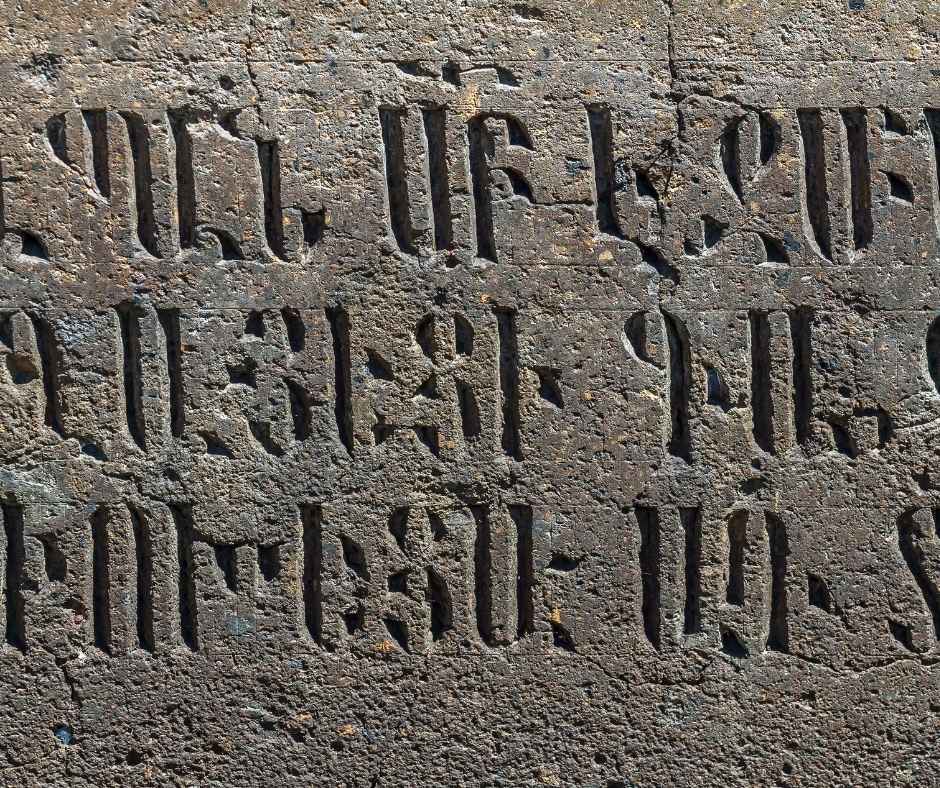
When you come to Armenia, one of the first things you notice is the writing.
Armenian letters look completely unfamiliar. The Armenian alphabet doesn’t resemble Latin, Cyrillic, or any other script you may have seen before. Even the sounds of the Armenian language can feel new to your ear.
But behind this uniqueness lies a deep and fascinating history. The Armenian language is a symbol of identity, culture, and resilience. The Armenian alphabet became the foundation that preserved the language and also shaped the nation’s cultural development.
In this article, we will uncover key facts about the Armenian language and understand why it holds such a special place in local history.
Origins of the Armenian Language
The Armenian language is one of the oldest surviving languages in the world and belongs to the Indo-European language family. Moreover, it forms its own independent branch.
Unlike many other languages, it is not closely grouped with any modern language, which makes it especially unique in linguistic studies.
Before the creation of a writing system, Armenian existed mainly as a spoken language. It had a rich oral tradition that included myths, stories, and early forms of literature. However, much of this early heritage was not preserved because it was never written down.
The Turning Point: Creation of the Alphabet
A major transformation in the history of the Armenian language came in 405 AD. It was a year when Mesrop Mashtots created the Armenian alphabet. His goal was not only linguistic but cultural and spiritual – to make religious texts accessible and to preserve Armenian identity.
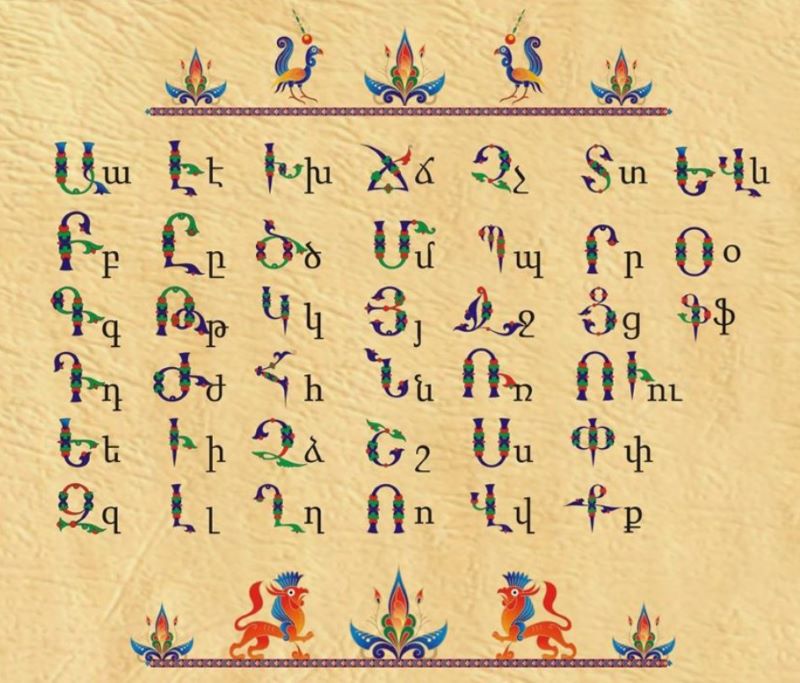
The alphabet originally consisted of 36 letters, carefully designed to match the sounds of the Armenian language.
How Mesrop Mashtots Created the Armenian Alphabet
The creation of the Armenian alphabet was not accidental. It was the result of careful research, travel, and a clear mission. Mesrop Mashtots understood that existing scripts like Greek, Syriac, and Persian could not fully represent the unique sounds of the Armenian language.
To solve this, he began studying different writing systems and consulted scholars in regions such as Mesopotamia. With the support of Catholicos Sahak Partev and King Vramshapuh, Mashtots worked to design a completely new script tailored specifically to Armenian phonetics.
The invention was revolutionary as it allowed the translation of religious texts like the Bible and laid the foundation for Armenian literature.
Key Features of the Armenian Language
The Armenian language stands out for its unique structure, rich sound system, and historical development. Let’s list some key features.
Additional Letters Added Later (Օ, Ֆ)
While the original alphabet had 36 letters, two more և (yev), Օ (O) and Ֆ (F) were added in the 11th century to better represent foreign sounds and evolving vocabulary.
Phonetic Richness
Armenian includes a wide range of consonant sounds, including aspirated and ejective consonants, which give the language its distinctive sound. An interesting fact, there are only 6 vowels in the Armenian alphabet, the rest are consonants.
Grammar Structure
Armenian has a flexible yet complex grammar system, including cases, verb conjugations, and sentence structures that differ from many European languages.
Extensive Loanwords
Throughout history, Armenian has absorbed words from Persian, Greek, Arabic, Turkish, Russian, and other languages.
Grabar: Classical Armenian
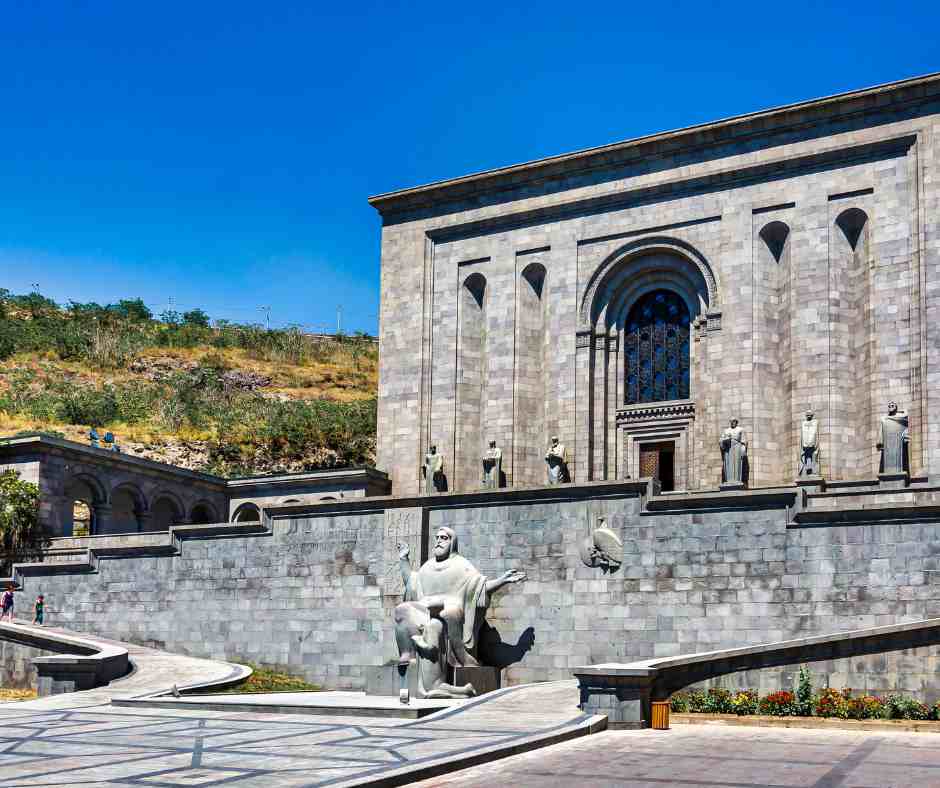
Classical Armenian, known as Grabar (meaning “written language”), is the oldest recorded form of the Armenian language.
The origin of Grabar is closely tied to the invention of the alphabet. This marked the beginning of a “golden age” of Armenian literature, where numerous works were written or translated into Classical Armenian
Over time, it became the standard literary language and remained dominant for more than a thousand years, from the 5th century until around the 18th–19th centuries.
Grabar played a crucial role in preserving not only Armenian culture but also parts of world literature. Many ancient works originally written in Greek, Syriac, or Persian have survived only through their Armenian translations.
Today, Classical Armenian is no longer used in everyday life. However, it remains highly important as a liturgical language in the Armenian Apostolic and Armenian Catholic Churches. It is still used in religious services and hymns.
In addition, scholars and linguists continue to study Grabar to better understand Armenian history, and early literature.
Armenian Dialects
Linguists estimate that there were once dozens of Armenian dialects, many of which differed significantly in pronunciation, vocabulary, and grammar.
Today, Armenian dialects are generally divided into two main branches:
Eastern Armenian: Spoken in Armenia. It forms the basis of the official language used in Armenia today.
Western Armenian
Historically spoken in the Ottoman Empire and now mainly preserved in the Armenian diaspora (Middle East, Europe, Americas).
Armenian Literature and Books
One of the first and most important achievements after the alphabet was created was the translation of the Bible into Armenian. This work is often considered a masterpiece and marked the beginning of Armenia’s literary “golden age.”
Over the centuries, Armenian literature expanded far beyond religious texts. Medieval manuscripts included works on history, science, poetry, and philosophy.
Many of these were carefully handwritten and preserved in monasteries. Some of them can still be seen today in the Matenadaran, one of the world’s richest repositories of ancient manuscripts.
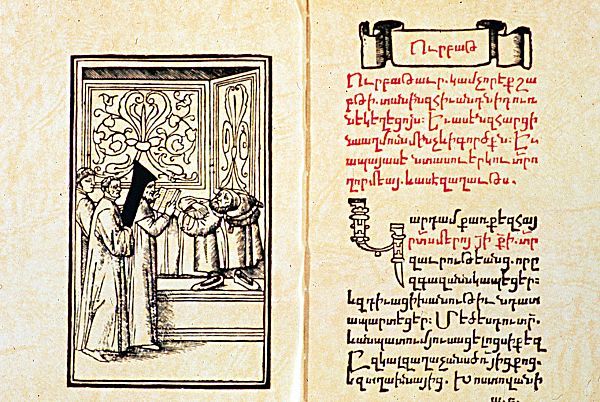
Armenian books also played a crucial role during difficult historical periods. The first printed Armenian book was published in 1512 in Venice. It was printed by Hakob Meghapart, who is considered the pioneer of Armenian printing. The book, titled “Urbatagirk” (Book of Fridays), was a collection of religious texts, prayers, and practical advice intended for everyday use.
Even when Armenians were scattered across different countries, literature helped preserve the language and identity of the nation.